
Creating a multi-state Parental Leave payment structure
It's expensive to pay someone not to work. So how do you create a parental leave payment structure that pays parents a livable income while they're on leave?

In this issue:
Overview of state-paid parental leave programs
Reasons why you shouldn’t leave it all up to the state
Factors to consider
Having a distributed team creates a conundrum when it comes to fairness.
On the one hand, state-paid programs can subsidize the cost of leave in the states that have paid leave programs. But then you’re subjecting both the parent and your HR team to a whole bunch of red tape that the folks in the stingy states don’t have to deal with. (More on why this sucks later.)
On the other hand, paying everyone the same regardless of the public programs in their state means that some parents will receive more resources than their colleagues.
In this issue, we’ll discuss how different state PFL programs stack up, why a generous parental leave policy is worth the investment, and why I don’t recommend top-ups (despite the apparent savings).
What’s the worst state to have a baby in?

How the hell should I know? I’m not a parent.
Just kidding. As you’ve probably noticed, I spend a lot of time thinking about leave administration and researching different states’ laws and paid leave programs.
Here’s what I’ve learned:
👎 The worst states to have a baby in are the ones with no state-paid programs.
You’d be better off if you were laid off. At least then you’d be eligible for unemployment. But it would be illegal to lay you off for having a baby, of course. So I guess the people in these states are screwed.
If you live in Alabama, Alaska, Arizona, Arkansas, Florida, Georgia, Idaho, Illinois, Indiana, Iowa, Kansas, Kentucky, Louisiana, Michigan, Mississippi, Missouri, Montana, Nebraska, Nevada, New Mexico, North Carolina, Ohio, Oklahoma, Pennsylvania, South Carolina, South Dakota, Tennessee, Texas, Utah, West Virginia, Wisconsin, or Wyoming, your state doesn’t have any guaranteed income while you’re on leave. That leaves you at the mercy of your employer.
😬 Only slightly better are the states that have “voluntary” programs.
If you live in Virginia, New Hampshire, North Dakota, statutory paid parental leave is “voluntary.”
WTF is a “voluntary” paid leave program? Wouldn’t everyone choose to be paid rather than not paid?
Sure, if it were up to you. But it’s not.
IF the employer wants to offer paid leave, they can buy state-subsidized insurance plans that meet a statutory minimum. But the minimum sets a low bar. It may be less than your employer would choose to pay without it as a reference point.
⏯️ Some states have programs that aren’t live yet.
Delaware, Maine, Minnesota, and Maryland have passed paid parental leave laws that won’t go into effect for months to years. That means that you’re paying taxes into the program, but you can’t get any money out yet.
Hopefully you can “hold it.”
😒 Some state programs are underwhelming
Rhode Island only pays for 6 weeks. California only pays for 8 weeks.
🙃 Some states are prone to error
Hawai’i and New York have mandatory paid parental leave or disability programs, but rely on private insurance to administer them. Some employers don’t realize they don’t have a policy until someone tries to file a claim. Which leads to delays in payment for the parent and penalties for the company.
(Side note: New York’s PFL is reasonable, but disability benefits are so low that it’s hardly worth the time to apply. Who can live off of $170/week in New York?)
😵💫 Connecticut is whack
Connecticut has a state program, but no one knows the details. Go to the state website and see for yourself. Five bucks says you can’t figure it out.
💰 The best states to have a baby offer a full 12 weeks (or more) at a livable weekly maximum. They are:
New Jersey (up to $1,170/week)
Washington, DC (up to $1,153/week)
Massachusetts (up to $1,170/week with generous disability extensions)
Colorado (up to $1,324 with generous disability extensions)
Washington State (up to $1,542 with generous disability extensions and job protections that last forever)
Oregon (up to $1,568 with generous disability extensions and job protections that practically never run out)
That’s why we built a resource that shows the length and maximum weekly benefit of state-paid leave programs. It also includes links to each state’s benefits calculator and additional information. Take a look here:
Why shouldn’t I just rely on state programs?

54 of the 217 countries in the world offer paid parental leave to all citizens. The US isn’t one of them.
Russians get it. The Chinese get it. Indians get it. Ethiopians get it. Pakistanis get it.
The US is the only developed nation that doesn’t offer some kind of paid parental leave. Our peers in parsimony are all distressed or destabilized developing nations like Nigeria, Afghanistan, and South Sudan.
With three more states’ programs coming online in 2026, a total of only 13 states now offer some form of state-paid parental leave in 2026 (1 more planned to start in 2028).
Everywhere else, it’s up to the business to pay its new parents, or not.
Many choose not to pay.
I get that it’s expensive to pay someone *not* to work for several months, but there are strong business reasons why you should do it anyway.
1️⃣ They’re not ready to come back sooner
Having kids comes with biological imperatives that are more persuasive than a passive-aggressive manager or an aggressive deadline.
Nausea, lack of sleep, nursing, the physical effects of childbirth, and a whole lot of really powerful hormones…
Trying to force someone to come back to work too soon when they’re distracted by other priorities can be like pushing a string. You can fight biology, but you’ll lose and so will the parents on your team.
2️⃣ They need money
Babies come with a ton of expenses and not everyone has the savings to absorb the cost on a partial (or no) income.
State benefits and private insurance often aren’t enough.
State benefits (where they exist) are often poverty wages and may not last for the full duration of leave.
Private disability usually only covers 6-8 weeks of 60% of salary. If it covers them at all, since non-birth parents aren’t usually eligible.
Many parents are forced back to work before they’re physically or logistically ready for a full-time workload.
3️⃣ The juice isn’t worth the squeeze
Many employers try to “save” money by topping up state benefits and disability, which can create a terrible experience for both the new parent and the person administering the leave. (More on that below.)
Costs are out of your control. Payments are held up while the state and insurance company process the claims and assess benefits. Confidentiality rules mean that the company is relying on the employee to report the outside income. And what are you supposed to do about healthcare deductions while you’re waiting to find out how much to top up?
You’ll spend more on lost productivity and lose the good will of the employee, who has other things on their mind right now.
4️⃣ Parents will look elsewhere if they can’t get their needs met
If work doesn’t give a new parent the support they need to balance the demands of work and life, they’ll look for a job that offers more support and flexibility.
Statistically, parents tend to be more experienced than their childless counterparts. Their lives are more settled, so they’re less prone to job-hopping. Parenting is also a phase of life that many of your most promising young workers may eventually go through.
Why would you push these workers out?
When you consider the cost of turnover and retraining, it’s cheaper to just pay them for a few months until their lives are more settled.
If you can afford to pay your team their full salary for the full period of their leave, just do it. On balance, it’s cheaper than the alternative.
If you can’t, invest in a generous short-term disability policy and work on non-monetary strategies to support them.
While money is good, putting thought into the non-monetary aspects of your parental leave program can be just as powerful. An employee will put up with a lot if they feel supported and seen.
If you want guidance on how to find opportunities to improve your team’s experience during parental leave, check out our free resource on creating parental leave policies that actually work. It’ll take you through 20+ questions that you may not have thought of and give you questions to consider for each one.
Why top-ups aren’t as great as you think
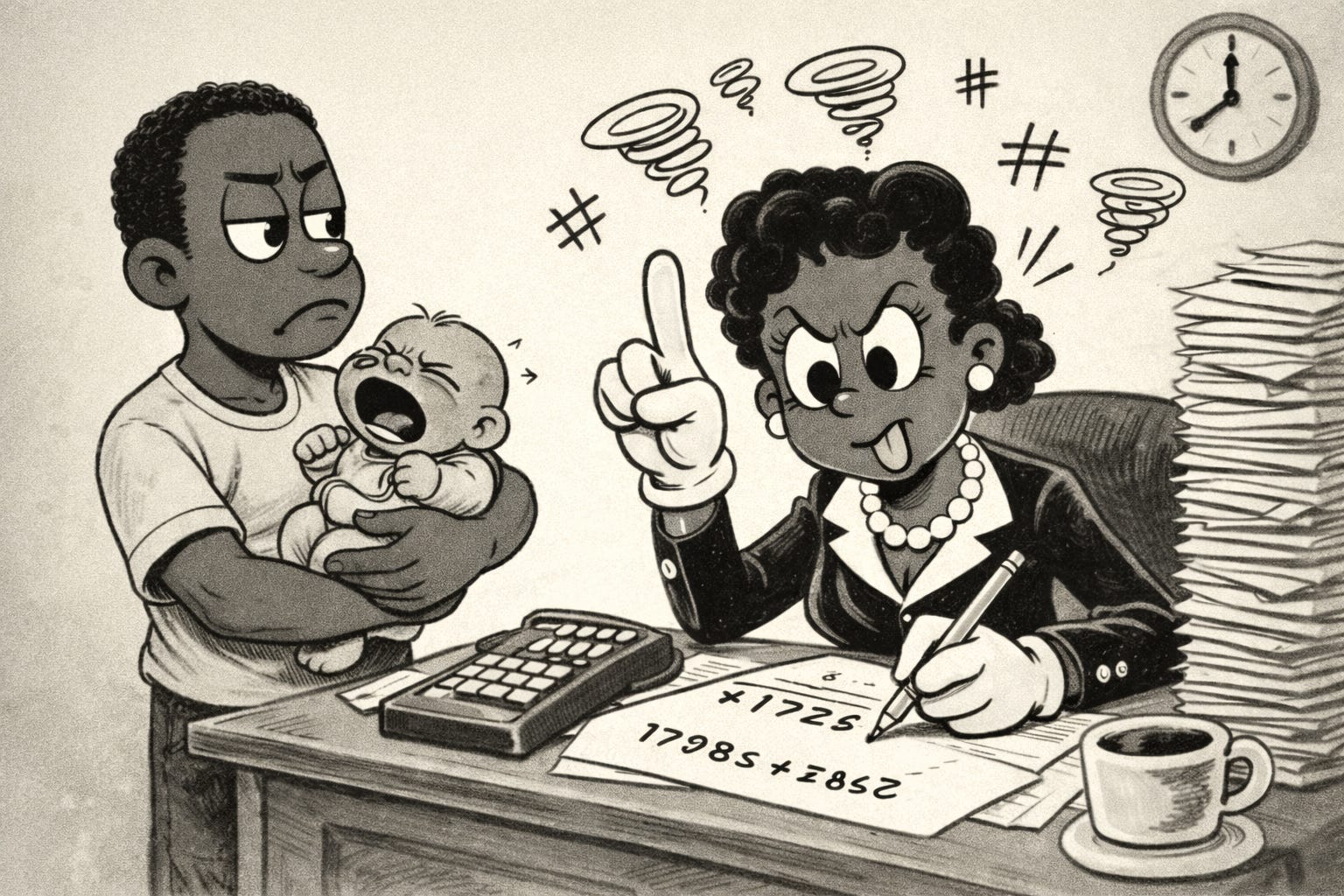
Two things people hate: insurance and government bureaucracy.
Why would you invite that nonsense into your business when you don’t have to?
Topping up state and insurance payments to supplement the cost of parental leave seems like suuuuuuuuuch a good idea. Until you actually try it.
If you think topping up will save money, let’s talk through what actually happens in a top-up policy:
🫠 State-paid Parental Leave
State-paid parental leave ~ if you have it ~ only covers up to a certain percent of the average weekly wage in that state.
If you make an above-average income (which most professionals do), your payments will be capped at less than the actual percentage you’re expecting.
And the state will take its sweet time. I worked with one father in Oregon whose claim wasn’t approved until his kid was 4 months old.
Result: You’ll have to either wait around for the state to confirm the payment amounts or just guess.
We built a quick and dirty calculator that can help you do the math. Try it out here:
🫨 Short-term disability insurance
Short-term disability insurance (STD) offers a higher maximum benefit than state programs, but many policies require filing for state benefits first and only pay the difference.
In some states, there are even laws about how much STD can stack on top of state and company benefits.
Because god forbid somebody get a “windfall” for not working during one of the most chaotic periods of their lives.
And STD is only available to birth parents. Meaning that less than 50% of new parents are eligible.
Result: You’ll be waiting on first the state, then the insurance company’s timeline.
And the approval notices from the insurance company are so confusing, that it’s hard to know for sure how much they’ll pay until the checks come in. Through the mail.
I once worked with a new mom in California who got a letter from the insurance company saying that she’d get $1,000 per week, but when the check came, it was for less than $20.
⌛️ Length of benefits
The length of time that the state or insurance will pay almost certainly won’t match the length of your company’s leave, meaning you’ll have to recalculate every time a benefit runs out.
Most insurance only pays for 6-8 weeks. To extend, the employee may have to file a follow-on claim.
And the states are even less predictable. Many offer different structures for birth and non-birth parents. And if state disability income (SDI) is a different program, the payments and rules may be completely different for the disability and bonding portions of leave.
The length of required job protections almost never lines up with the length of state benefit payments, either.
Result: You’re trying to follow the logic of a state that may recalibrate benefits several times in the course of the leave.
⏲️ Increments of time
Both insurance and state benefits usually pay out weekly. But what if you pay semimonthly?
And you have to deduct their portion of benefits, which are usually invoiced monthly.
If the employee’s payment amounts change from week to week because of waiting periods, partial weeks, processing delays, or changes in any of the factors above, so will the top-ups.
It’s up to you to do the math. Good luck!
If you’d like to see how I estimate top-ups, check out last week’s post.
🙈 Effing HIPAA
Both state and insurance claims require that the employee share health information as part of their claim. Which means that the status and amounts of their claims are legally none of your beeswax.
Result: You’re relying on the employee to navigate all of these claims themselves and report the results back to you.
THEY have to check their snail mailbox.
THEY have to call the insurance company or state.
THEY have to wait on hold and make sense of what insurance or the state tells them. Then THEY have to report it accurately back to you.
And, in case it isn’t obvious already, THEY are already rather busy and sleep deprived.
😫 And you’re the one who has to figure it all out
Managing all of this takes time and brain power. You’re contacting the employee, looking up policy details, doing unconfident math, and trying to figure out payroll work-arounds. The lost productivity cancels out the amount you’re saving by relying on these outside subsidies.
Meanwhile, the new parent thinks it’s all your fault and blames you for the terrible experience you’re putting them through.
I’ve been through this before. Trust me. Even when a top-up is the right way to go, you’ll regret it.
Resources
These tools and resources are meant to simplify your paid leave payment structure, but the truth is, it’s always hard.
🗺️ If you need more guidance scoping your parental leave policy, check out the free Practical Guide to Creating Parental Leave Policies that Actually Work.
📕 For more about state-paid family leave in the 13 states that have it, check out our State Paid Parental Leave Resource.
🧮 For help estimating top-up amounts, try the quick and dirty calculator.
📚 For more information about writing the policy itself, check out this post.
🦾 If you’d like to work on it together, contact us to be part of the pilot program for the Parental Leave Policy Builder. We’d love to meet you.